
CENER coordinates a European project to evaluate the impact of climate events on wind technology.
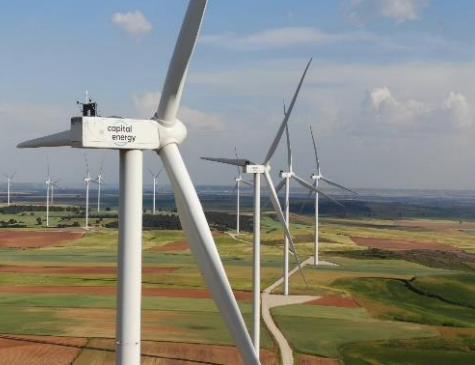
CENER coordinates in the AIRE project a total of 11 European organizations, researchers, blade manufacturers and wind farm developers, to investigate the impact of rain, clouds, sand, wind profile and wind flow in the design of wind farms, wind turbines and O&M strategies.
If Europe is to meet its decarbonisation commitments, installed wind capacity in 2050 must reach 643 GW onshore and 457 GW offshore, a four-fold onshore capacity increase and a 25-fold increase offshore from 2017 levels. To achieve this growth, wind farm developers will have to use turbines at higher altitudes and explore new geographic regions, including the sea. Blade designers and manufacturers must also improve their technology, wind turbines will continue to adapt to new regions and grow. The average capacity of the turbines installed in 2020 was 8.2 MW and those projected for floating wind reach much higher values, 20-30MW. It is estimated that future wind turbines will reach blade tip heights of 300 meters or more.
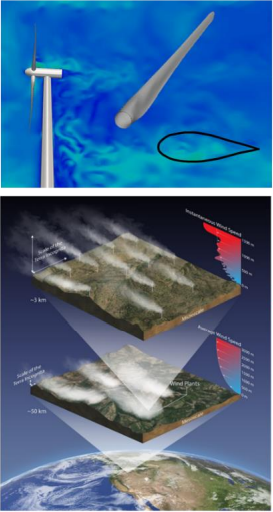
Currently, wind turbines and wind farms are designed and operated considering “just” wind conditions. Consequently, the models do not take into account the physics and aerodynamics of atmospheric wind flows at high altitudes, neither how this is affected by the location, the effect of precipitation and/or sand. This reduces the efficiency of wind energy production, and negatively impacts on the energy outputs, operating costs and lifespan of blades and turbines.
The AIRE project will take measurements of wind, including precipitation and sand, at different sites, both experimental and industrial, and publish them on an open Access Knowledge Hub so that they can be used by researchers and engineers to develop their own models.
The uncertainties of current wind farms will be addressed with improved numerical models (wake models, control models, mesoscale models and airfoil models), capable of estimating wind flow at high altitudes, and energy production, as well as integrating the models with data from real wind farms.
The organizations participating in the project, leaders in their respective fields, are: Capital Energy, Engie, Siemens Energy, PLOCAN, University of Las Palmas, Fraunhofer, Teknologian Tutkimuskes kus VTT, Danmarks Tekniske Universitet and ORE Catapult.
The project allows CENER to provide wind farm developers with better estimates of wind farm energy production (AEP) as well as blade erosion mitigation methods, such as the wind turbine control strategy. And it also improves the service we provide to blade designers with better load estimates, evaluation of the impact of erosion on blades or technical advice on blade erosion.

“Funded by the European Union. Views and opinions expressed are however those of the author(s) only and do not necessarily reflect those of the European Union. Neither the European Union nor the granting authority can be held responsible for them”