
RULET, a tool to know the wind turbines health status for a better management of their useful life.
The energy transition requires ambitious targets for the installation of new MW of wind power, but also for the optimised management of the operation and maintenance of the 250GW of wind turbines installed in Europe. Existing turbines need to generate more power and for longer.
Europe advanced rapidly and steadily in wind energy in the 90s, which allowed it to become a wind power both in the value chain and in installation indicators: MW installed or percentage of electricity of wind origin. Today, turbines from those first developments, which were installed last century and boosted the European learning curve, coexist in the European wind farm with new generation turbines with decades of operation ahead.
In addition to the excellent learning curve in design, manufacture and installation, it is also necessary to highlight the experience accumulated in operation and maintenance (O&M). This experience allows us today, for example, to quantify the impact that a bad O&M has on the useful life of the turbines, as well as the extra energy that a turbine can offer us, for having done things well, or simply because the turbine has not been exposed to the operating conditions for which it was designed.
O&M is key to the long-term performance of wind farms, and yet, in many cases, it is difficult to understand what happened, why it happened, or predict what will happen. Especially if it is an accumulation of factors over 25 or 30 years, which result in the failure of the turbine. In many cases, it is impossible to correlate with conventional methodologies.
There is a need to better understand wind turbines in their actual operating conditions. And yet, it’s easy to get lost in the tsunami of information available today in companies’ IT services: physical sensors, indicators, and reports.
The current wind exploitation model has not incorporated the full potential of the engineering and simulation models present in the design stage of the wind turbine or farm, renouncing opportunities for improvement to reach the 30-40 years that are desired for many wind farms. The evolution of simulation tools, data processing capacity and multi-fidelity physical models offer new possibilities for complex analysis of the varied information available for better life management.
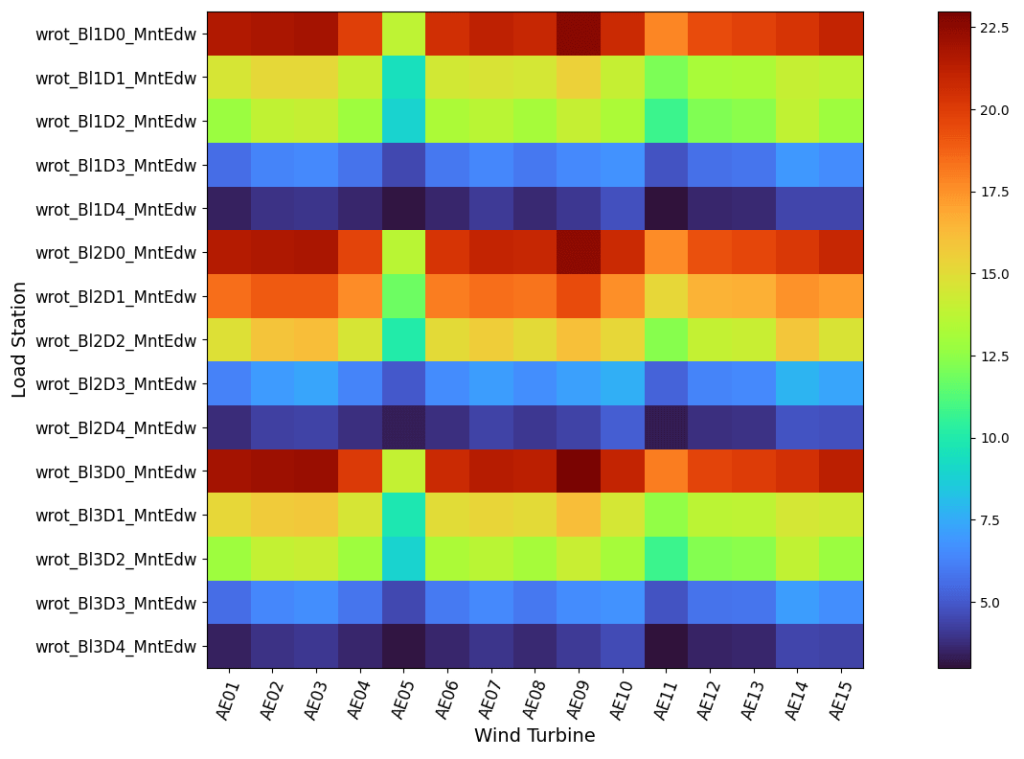
This is the line of work that CENER has followed to develop RULET, a tool for estimating the remaining life of the structural components of the wind turbine. The tool incorporates state-of-the-art simulation of physical models of wind turbines along with data measured by the turbine or recorded in the wind farm. RULET allows wind farm operators to understand the health status of their turbines and analyse the impact that different operating modes or site-specific conditions have on the turbines, even in real-time monitoring.
The tool is integrated into CENER’s wind farm assessment platform. Platform that allows simulating complex technical-economic scenarios, from turbine retrofits to complete repowering of the power plant. Simulations that provide knowledge for correct long-term decision making.
Both RULET and the digital platform are part of CENER’s strategy to provide the wind industry with simulation tools that are adapted to the particular needs of each organization and that incorporate the state of the art of wind engineering. In issues as critical as the one presented today, health status of the turbines, and also: floating wind, hybridization with other renewable technologies or integration of wind in the grid.