
Unleashing the Full Potential of Wind Turbines: Overcoming Blade Erosion with Machine Learning
CENER has spent years honing its expertise in Computational Fluid Dynamics (CFD) simulations. This powerful tool allows us to meticulously analyze the complex physics at play, including the impact of erosion on turbine performance. While CFD provides valuable insights, a crucial challenge remains: accurately predicting the long-term effects of diverse weather conditions on a blade’s performance. This is where cutting-edge computational methodologies step in, opening the door to a groundbreaking solution.

Wind turbine blades are constantly exposed to harsh conditions, leading to erosion that can significantly impact performance. This erosion can reduce power output till necessitate premature blade repairs, adding significant costs to wind farms.
Traditional methods for blade design relied on established onshore technologies, but the rapid advancement of wind turbine and its expansion into new geographical regions has highlighted the limitations of these approaches. The changing landscape has resulted in more severe erosion cases. As dramatic as the emergency repair on blades of 630 MW in London Array windfarm due to leading edge erosion after 5 years operation.
Here’s where cutting-edge CFD and data analysis techniques come in. These methodologies allow us to create multi-factor erosion models for any blade airfoil design that account for various environmental factors. These factors include, aggressive atmospheres (icing, desert environments), wind farm wakes (turbine-to-turbine interaction), offshore environments (saltwater spray), wind speed and direction, precipitation (rain, hail), blade condition and material and operating conditions.
The AIRE Project tackles these challenges head-on. We’re developing a Machine Learning (ML) model to assess airfoil performance under diverse weather conditions and blade geometries. This model is being trained with a vast amount of data, CFD, panel method’s tools and wind tunnel test, to accurately predict how blades will erode over time.
Different ML algorithms are being utilized. Each algorithm has its strengths and weaknesses, offering a complementary approach to achieve the most accurate results. The initial results are highly promising, demonstrating a near-perfect match between Computational Fluid Dynamics (CFD) simulations and the ML model’s estimations of lift and drag. This success paves the way for a significant advancement in wind turbine technology worldwide.
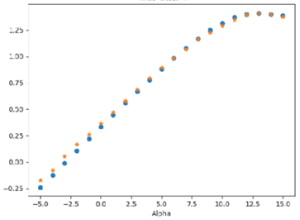
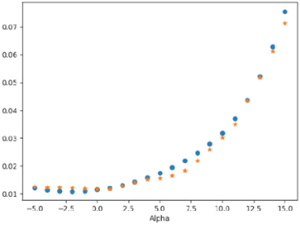
The AIRE Project led by CENER represents a groundbreaking approach to blade erosion management. By leveraging the power of Machine Learning, we can create a future where wind turbines operate at peak efficiency for longer, generating cleaner and more reliable energy.
- Improved wind turbine design and performance: More consistent power output throughout the turbine’s lifespan.
- Reduced maintenance costs: Help wind farm operators avoid costly premature blade replacements.
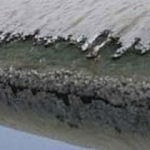
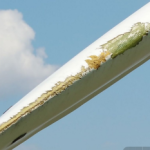
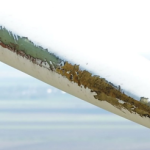
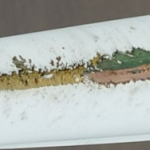
Source of pictures: IEA Wind Task 46, Erosion of wind turbine