
CENER supports the implementation of the new norm that will accelerate Grid Forming capabilities in wind turbines
The new certification methodology will represent a qualitative leap in the certification quality of wind turbines and their electrical simulation models. This is because it will enable previously unfeasible tests, such as those related to frequency variation. This is critical for validating Grid Forming functionality.
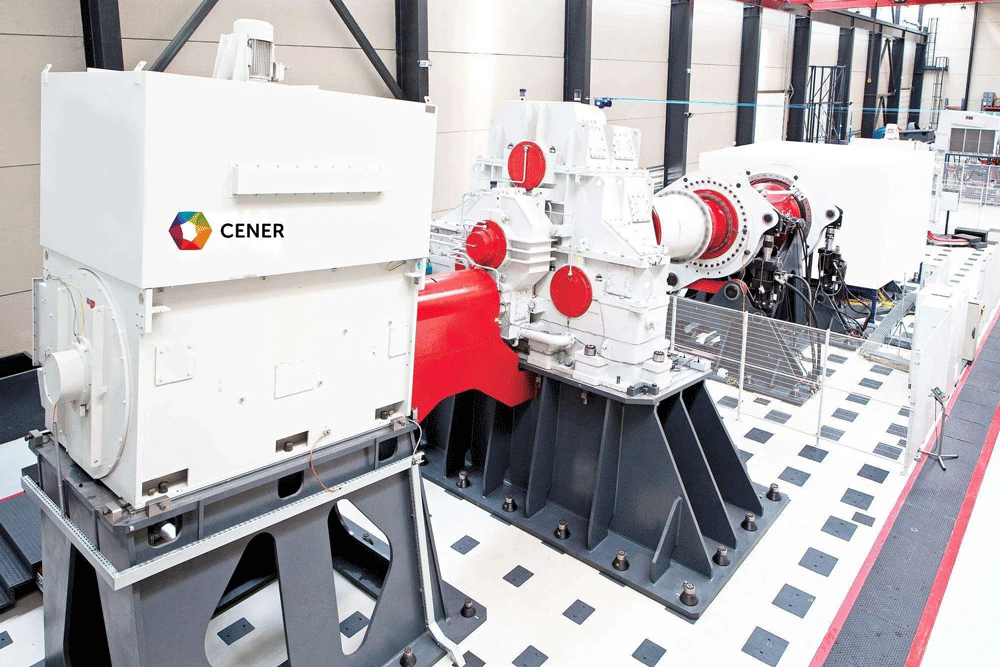 The recent publication of the new IEC61400-21-4 standard marks a significant milestone in wind turbine electrical certification. This groundbreaking regulation now allows a substantial portion of certification tests, previously exclusive to field prototypes, to be conducted in a laboratory setting.
This shift marks a turning point as laboratory testing significantly enhances the representativeness and repeatability of tests, thereby improving the quality of the data obtained. Furthermore, it enables wind turbine and component manufacturers to expand their testing range, reduce certification timelines, and lower costs.
It’s well-known that current converter-based renewable energy sources (IBRs) don’t yet provide sufficient stability for a 100% renewable energy mix on the electrical grid. However, the renewable energy industry has made significant strides in recent years, developing Grid Forming control techniques. These techniques allow IBR generators to behave as voltage sources and contribute (synthetic) inertia, crucial for grid stability.
When installed in IBR generators, these advanced control techniques will enable a continued increase in the proportion of renewable generation in the energy mix. They are key to helping compensate for the inevitable grid disturbances, paving the way for a more resilient and sustainable energy future.
The new standard methodologies for electrical power conversion lab testing will significantly accelerate the evaluation and improvement of generator (IBR) behavior during frequency disturbances. These methods also enable the validation and certification of electrical models with greater precision and reliability. These highly accurate models are a fundamental tool for technologists, utilities, and system operators. They allow for thorough studies of grid component stability, ultimately ensuring that generation systems are reliable and provide the necessary stability under all operating conditions.
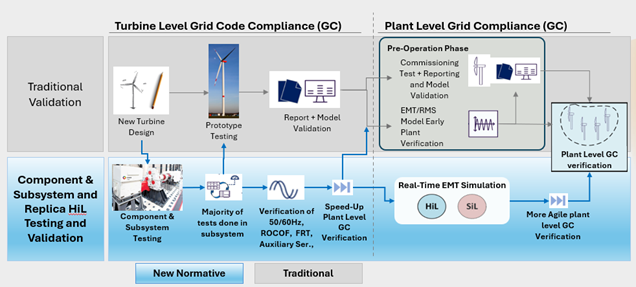
The figure below illustrates the current field validation process compared to the new standard’s approach. Lab testing allows for a greater number of tests, with more control variables (amplitude, frequency, phase, RoCoF, etc.), under more controlled conditions, and within shorter timelines.
CENER understands the technical challenge well. Numerous technologies have been tested in various operating modes at its test benches and experimental wind farm to validate and certify wind turbines and components. Additionally, CENER has the knowledge and tools to validate electrical models based on tests conducted in the laboratory or at the experimental wind farm.