
How AI is Reshaping Wind Engineering
 The AI market in finance is four times larger than in energy. This is not a sign of failure, but a massive opportunity for the wind sector to leap forward. In this article, CENER moves beyond the hype to explore where AI delivers the highest impact today, wind sector barriers for AI and how CENER is integrating AI, accelerating floating wind and blade design or enhancing O&M.
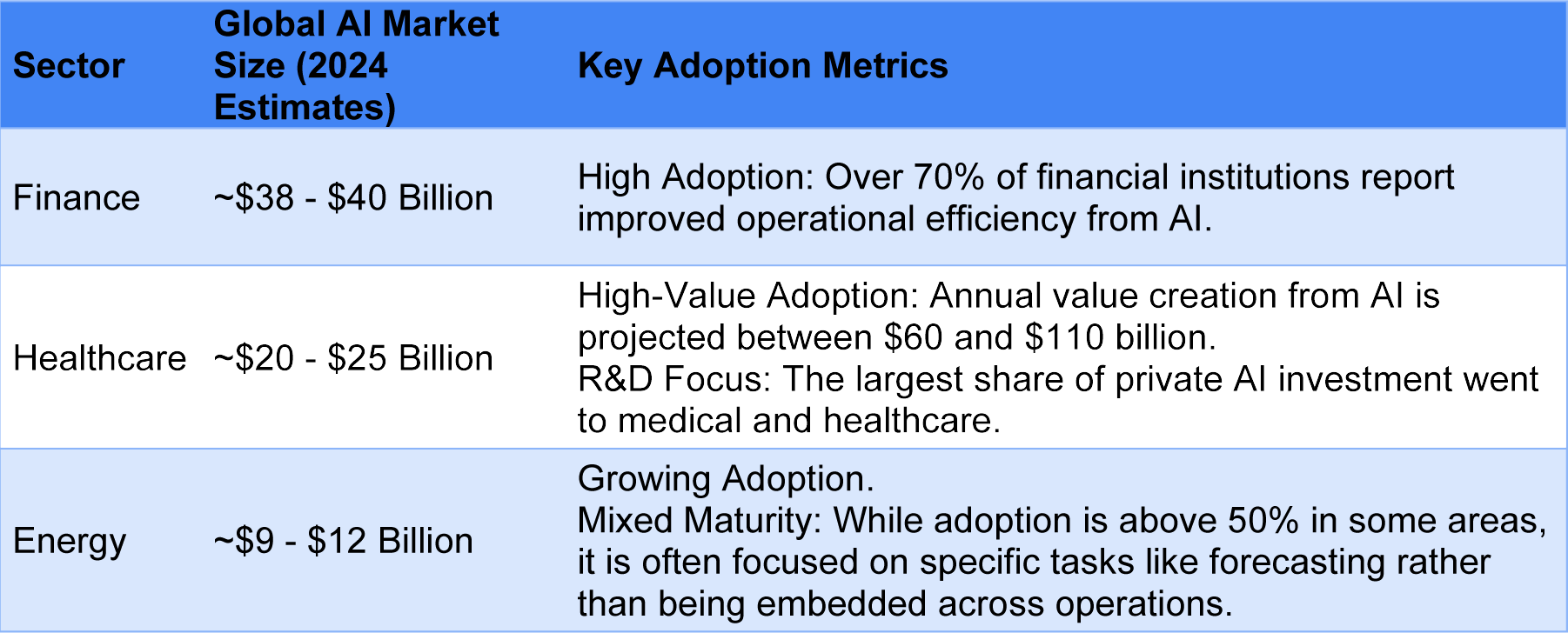 While AI is revolutionizing finance or pharmaceutical sector, its adoption in the energy sector has been comparatively slow. The AI market size in finance is three to four times larger than in energy. A gap that reflects a lag in the investment progress, deployed solutions and overall maturity of IA in the sector. This presents a massive opportunity for the increasing complexity of the energy sector, leading the next wave of innovation.
The promise of AI extends across the entire value chain, from project planning and turbine design to decommissioning. However, unlocking this potential is not about applying generic algorithms; it requires solutions tailored to the specific complexities of wind technology.
CENER has identified two areas that can benefit from AI solutions, complex designs and simulations, which offer exponential returns through early optimization, and advanced operation and maintenance, benefiting from the vast amount of data generated by the operating wind farms.
Our AI-Powered Solutions
 Modern wind turbine design relies on extensive numerical simulations to account for thousands of combined operational and environmental conditions, from wind and waves to turbine operating status. This results in a massive volume of data, structural loads and moments, creating a significant bottleneck in the engineering process. CENER’s works on a hybrid resolution framework, engineering and AI combined simulations, that navigates the vast simulation outputs, reducing analysis time and computational cost.
- Blade aerodynamics design with traditional CFD simulations can be a costly and slow process, limiting engineers to exploring the actual effects of design variations or erosion on performance. CENER’s AI solution has solved the challenge with a trained AI that delivers accuracy in seconds, not hours or days, providing engineers with near-instant airfoil aerodynamic performance, transforming the design iteration cycle. Looking ahead, we are now leveraging this same predictive model to redefine proactive blade maintenance plans.
- Wind turbines are complex unmanned machines generating vast amounts of data. This data collected over the years has become the trigger of an O&M revolution based on new analytic capabilities driven by AI. CENER’s solution, WENDY, for digitalization and turbine monitoring is now being coupled with AI to generate data-driven turbine models and provide enhanced insights combining data science methodologies with physical modeling.
Each of these developments provides tangible proof of the barriers that CENER and the wind sector must overcome for AI adoption:
- Data Scarcity & Quality: The lack of large, high-quality, and standardized datasets; the essential fuel required to train reliable and robust AI models. We began a journey years ago, which culminated in WENDY, a solution that delivers advanced monitoring and analytics for real-world wind farms.
- Talent Gap: A shortage of professionals who combine deep engineering domain knowledge with advanced data science skills.
- Conservative & safety culture: The industry’s necessary focus on reliability creates barriers for adopting revolutionary but unproven tools, especially when failures involve expensive and dispersed assets. Making design engineers difficult to introduce tools with shorter track record.
- Extended ROI Cycles: While the financial benefits of AI are significant, they are often realized over a longer period, making it challenging to justify the upfront investment compared to sectors with more immediate returns.
Building Trust is key for the roll out of AI solutions. For AI-driven insights, or even AI-automation, to be commercially viable, they must be trusted. State that a critical step forward is for certification entities (e.g., Bureau Veritas or DNV) to establish clear, standardized frameworks for validating and approving models trained with or based on AI. This is essential to de-risk innovation and make AI-designed projects “bankable”.
A final thought for Europe: Leading the AI wind energy revolution does require vision. To make Europe a leader in this field, a collaborative strategy is needed. This should focus on creating partnerships to build shared data repositories, fostering regulatory “sandboxes”, where new AI technologies can be tested and validated safely, and specialized training programs.