
HYDROGEN WITH LESS WATER IMPACT: THE GACSOEC PROJECT
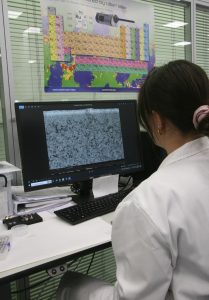
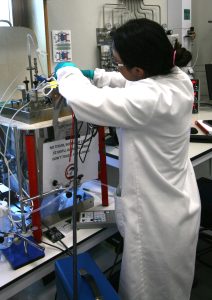 While hydrogen has emerged as an alternative for industrial decarbonisation, its production through electrochemical routes requires high-quality water, which can be a problem in areas with water scarcity. The GACSOEC project analyses the use of SOEC (Solid Oxide Electrolytic Cell) technology to generate hydrogen from non-conventional water sources from a dual perspective: on the one hand, analysing the effect of the chemical composition of the source water on the performance of the electrochemical cells, and on the other, applying low-cost, highly competitive treatment processes to remove impurities.
The project is coordinated by Envirohemp S.L., a company based in Puente La Reina (Navarra) specialising in the development of advanced products from biomass, and includes the participation of Centro Nacional de Energías Renovables (CENER) as a collaborating partner. Within this centre, the work of the Hydrogen Area focuses on studying the efficiency of the electrolytic production process and identifying degradation phenomena, all within the SOEC technology framework. Envirohemp S.L., for its part, is involved in developing physical water treatment processes to adapt water for hydrogen generation.
The project has been funded by the Government of Navarre and the European Regional Development Fund (ERDF) under the 2024 R&D Project Grant Call from the Government of Navarre, and is currently in its final stages. The results obtained so far demonstrate the potential of certain adsorption treatments for purifying tap water to reliably produce hydrogen. However, they have also revealed areas for improvement that both organisations intend to continue working on in the future, such as the targeted removal of specific substances and the need for greater control over the water evaporation process as an additional way to ensure system stability.